
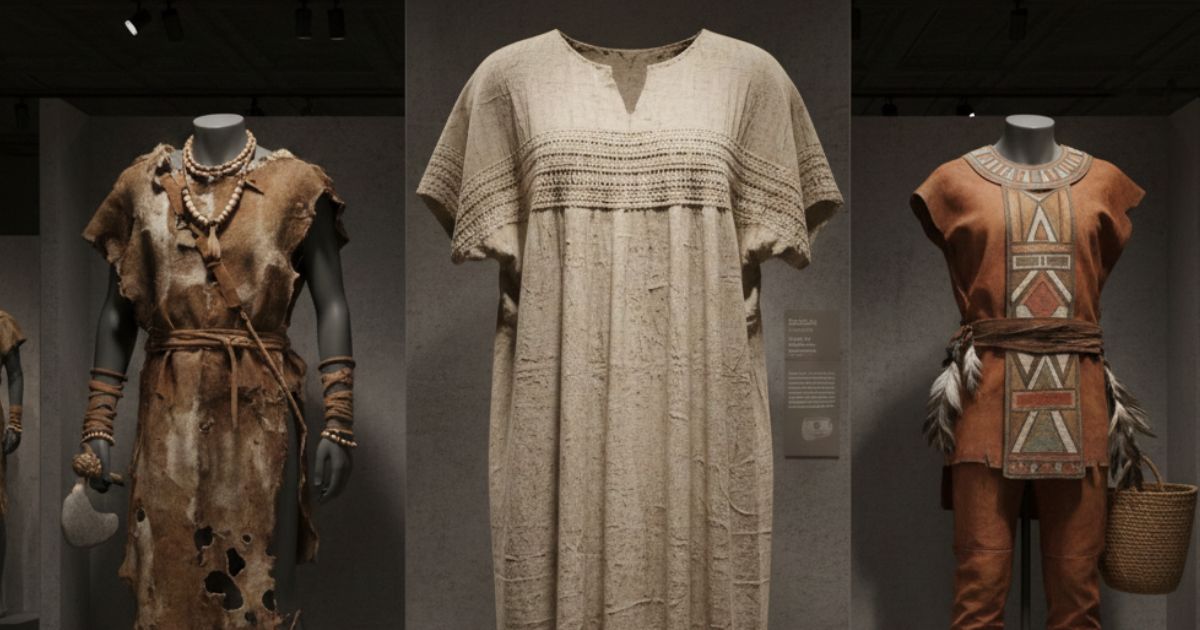
Have you ever paused while getting dressed in the morning and wondered about the very first humans who decided to cover up—not just for warmth, but maybe for a touch of style? It’s a question that takes us back thousands of years, to a time when clothing was born from necessity but quickly blossomed into something more. In this article, we’ll dive into the oldest fashion ever uncovered, spotlighting the remarkable Tarkhan Dress as a pivotal artifact in textile archaeology. We’ll trace how simple coverings evolved from survival tools into symbols of culture and status, blending history with a sense of wonder. Whether you’re a fashion student sketching ancient inspirations or a history buff craving stories from the past, prepare to journey through the origins of human attire and see how it shaped our world.
The Dawn of Clothing: From Animal Skins to Woven Wonders
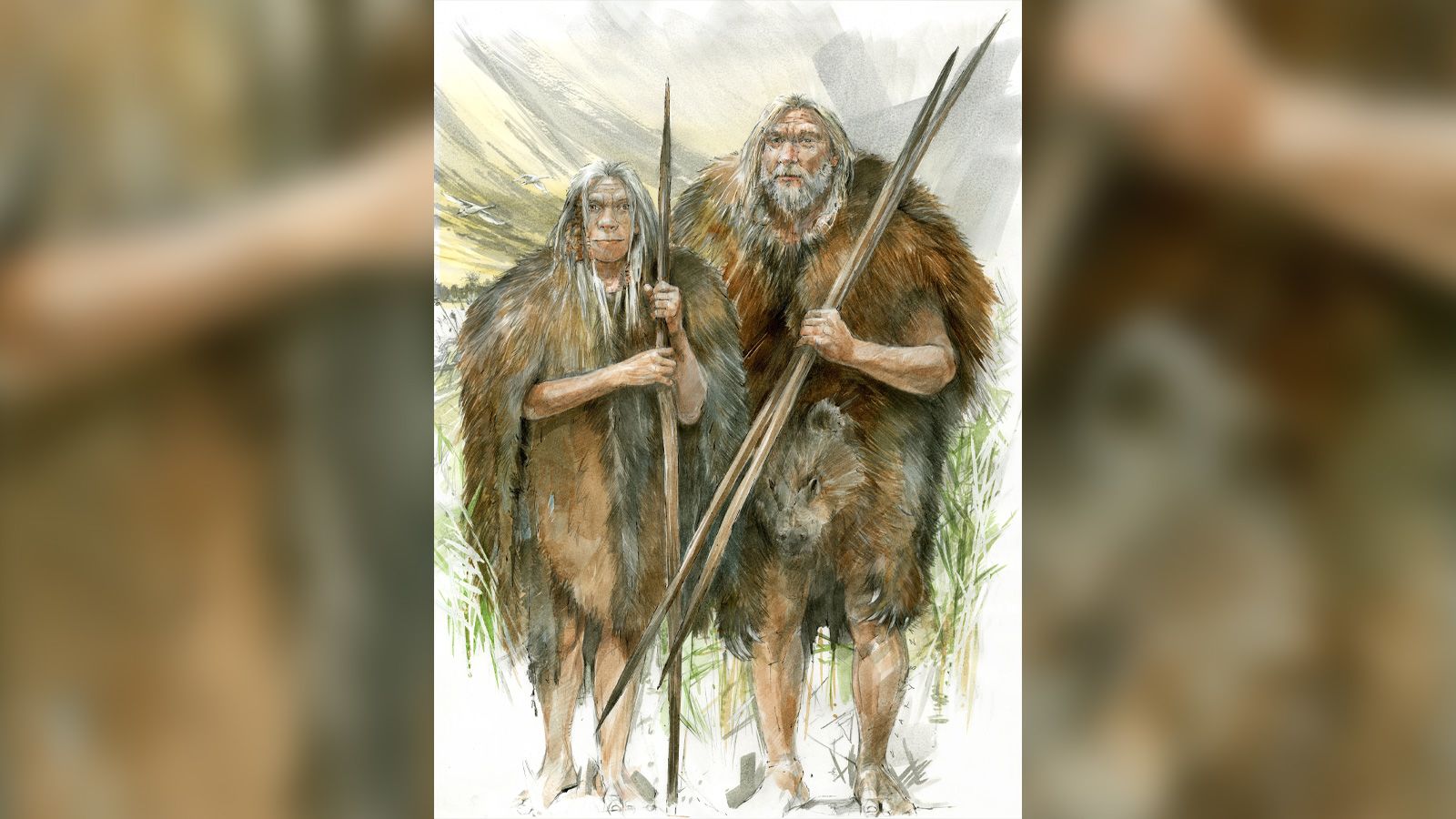
Picture this: It’s the Paleolithic era, tens of thousands of years ago, and early humans are huddled in caves, facing brutal weather. What did they reach for first? Animal hides, of course—scraped clean, draped over shoulders, and perhaps tied with sinew. These weren’t just random wraps; they were lifelines against the cold, rain, and sun. But here’s where it gets fascinating: clothing didn’t stay purely functional for long.
Archaeologists have pieced together evidence showing that prehistoric clothing began around 300,000 years ago, based on tools like bone awls used to punch holes in skins. These early innovations allowed for fitted garments, hinting at the first sparks of personalization. Imagine a Neanderthal carefully selecting a bear pelt not just for warmth, but because its fur gleamed in the firelight. Was that the birth of style?
As humans migrated and adapted, materials diversified. In warmer climates, plant fibers joined the mix, twisted into rudimentary cords. But the real game-changer? The invention of eyed needles around 40,000 to 25,000 years ago. These tiny tools, carved from bone or ivory, enabled sewing—transforming loose hides into tailored outfits. Suddenly, clothing could express identity, status, or even artistry. Think of it like upgrading from a basic tarp to a custom coat; it marked a shift from mere survival to something cultural.
This evolution wasn’t uniform. In icy regions, layered furs dominated, while desert dwellers favored lighter wraps. Yet, across continents, one thing was clear: humans were innovating. By the time we reach the Neolithic period, around 10,000 BC, settled communities began experimenting with weaving, setting the stage for more complex textiles. It’s a reminder that fashion evolution starts with ingenuity—turning raw nature into wearable art.
This picture is the property of cnn.com
Why does this matter today? Understanding these roots helps us appreciate how far we’ve come. If you’re tracing the oldest fashion trends, start here: from hides scraped with stone tools to the precursors of modern threads. It’s not just history; it’s the foundation of every outfit in your closet.
Unearthing the Tarkhan Dress: A Portal to Ancient Elegance
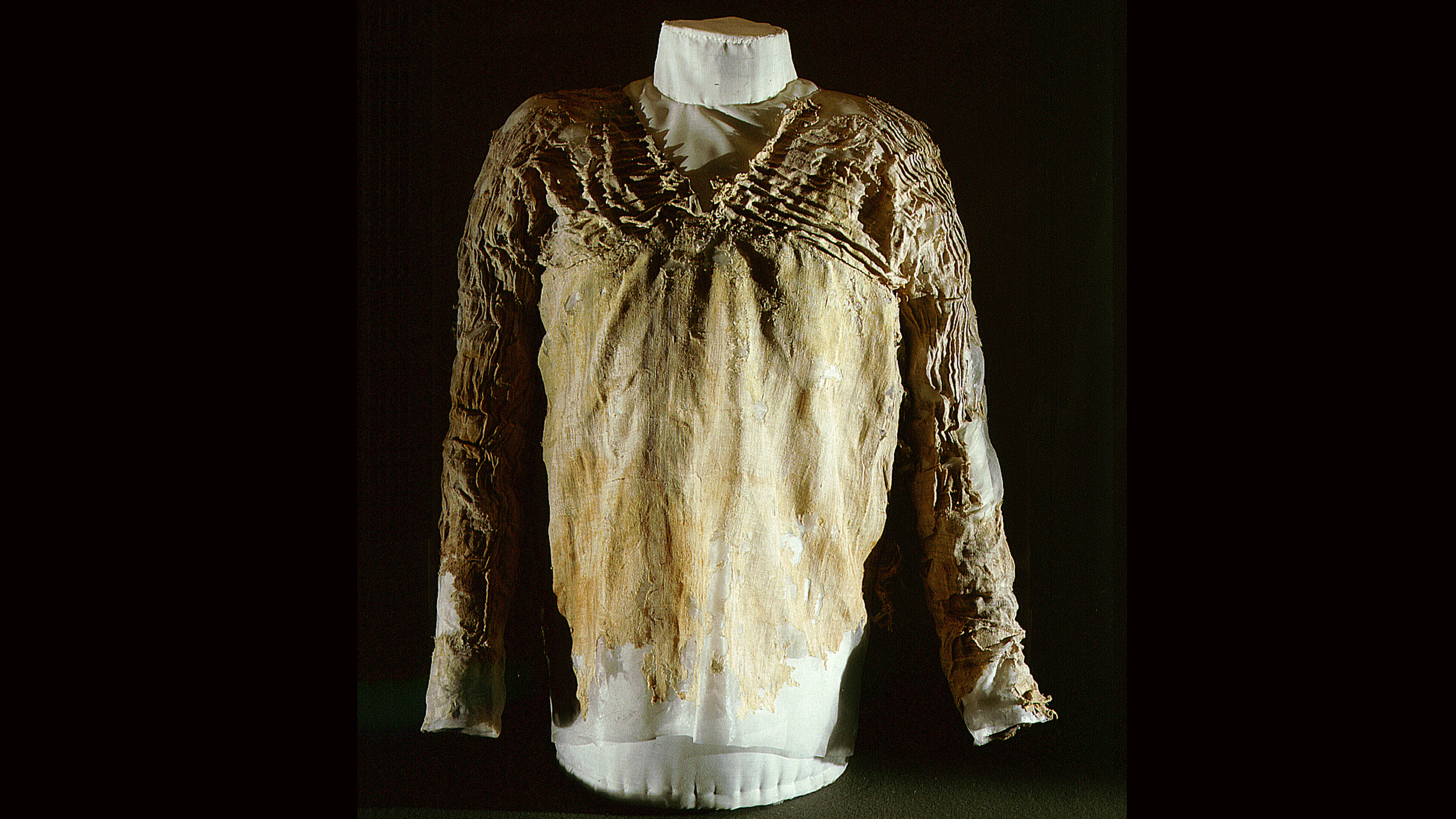
Fast-forward to ancient Egypt, where the sands have preserved secrets that still astonish us. In 1912, renowned Egyptologist William Flinders Petrie was excavating a cemetery near Tarkhan, about 30 miles south of Cairo. Amid the dusty tombs, his team uncovered a bundle of linen—crumpled, fragile, but intact. Little did they know, this was no ordinary find. It was the Tarkhan Dress, now confirmed as the world’s oldest woven garment, dating back to 3482-3102 BC.
What makes this dress so extraordinary? For starters, it’s over 5,000 years old, predating even Egypt’s First Dynasty by a bit. Crafted from fine ancient Egyptian linen, it features pleats, a V-neck, and tailored sleeves—details that scream sophistication. Imagine a garment that could almost pass for a simple tunic today, yet it was buried with someone of status, perhaps worn to a funeral. The dress measures about 5 feet long, suggesting it was made for a slender adult or teenager, and its preservation is a miracle, thanks to the dry tomb environment.
Petrie initially thought it was from a later period, but radiocarbon dating in 2015 pushed its age back, solidifying its place in history. Housed in London’s UCL Petrie Museum, it’s a tangible link to our ancestors’ daily lives. For archaeology buffs, this artifact isn’t just cloth; it’s a story of craftsmanship and society.
What the Tarkhan Dress Reveals About Ancient Life
Diving deeper, the dress offers clues about Bronze Age garments and daily existence. Linen, derived from flax plants, was ideal for Egypt’s heat—breathable, lightweight, and absorbent. But producing it was labor-intensive: harvesting, retting, spinning, and weaving on simple looms. The pleats? Likely created by folding wet fabric and letting it dry, a technique that shows early aesthetic choices.
Was this dress everyday wear or something special? Evidence points to the latter. Found in a high-status grave, it might have symbolized purity or wealth—linen was prized, often reserved for the elite. It challenges our assumptions about prehistoric simplicity, proving that even then, people cared about appearance.
For fashion students, it’s a masterclass in timeless design. The structured shoulders and fitted bodice echo modern tailoring. If you’re discovering the oldest fashion in the world, the Tarkhan Dress is your starting point—a humble yet profound relic.
This Image is the property of livescience.com
Crafting the Oldest Fashion: Techniques That Shaped History
How did our ancestors turn plants into fabric? Let’s break it down. Weaving techniques evolved from basic basketry to intricate looms. In prehistoric times, fibers like nettle or hemp were hand-twisted, but by the time of the Tarkhan Dress, Egyptians had mastered warp-weighted looms—vertical setups where threads hung with weights for tension.
Flax was king in Egypt. Workers soaked stems in the Nile to separate fibers, then spun them into yarn using drop spindles. Dyeing came next, with natural dyes from plants like indigo for blues or madder for reds—though the Tarkhan Dress remains its natural off-white, perhaps bleached in the sun.
These methods weren’t unique to Egypt. In Mesopotamia, wool dominated, dyed with minerals. But Egypt’s linen set a standard for durability and fineness. Imagine the skill required: no machines, just hands and ingenuity. Mistakes? Costly, as resources were scarce.
For those interested in how the oldest fashion was made, consider the tools—bone needles, stone weights. It’s empathetic to think of the weavers: likely women in communal settings, passing knowledge through generations. This hands-on approach influenced fashion evolution, turning utility into expression.
Common pitfalls in studying these? Overlooking context. Not all garments survived; linen preserves better in dry climates than wool in wet ones. Tips for enthusiasts: Visit museums or try hand-weaving to feel the connection.
Innovations in Prehistoric Textiles
Beyond weaving, sewing advanced with those eyed needles, allowing decorative stitches. In colder areas, fur linings added warmth and flair. As societies grew, trade introduced new materials—silk from Asia later, but early on, it was local ingenuity.
Relate it to today: Modern sustainable fashion echoes these roots, using natural fibers to combat fast fashion. If you’re building a wardrobe inspired by history, opt for linen pieces—they’re timeless, just like the Tarkhan Dress.
From Function to Fashion: A Timeline of Sartorial Shifts
Let’s map this out. The evolution of oldest fashion garments is a thrilling timeline, blending survival with sophistication.
- 300,000-100,000 BC: The Survival Era – Early humans use animal skins for protection. Evidence from cut marks on bones suggests scraping hides. No frills, just function.
- 80,000-40,000 BC: Tool Innovations – Bone awls appear, enabling perforated and laced garments. Clothing becomes more fitted, hinting at body adornment.
- 40,000-10,000 BC: The Artistic Turn – Eyed needles revolutionize sewing. In Europe, Venus figurines show draped clothing, suggesting style for rituals or status.
- 10,000-5000 BC: Neolithic Weaving – Settled farming brings flax and wool cultivation. Simple looms produce woven cloths, expanding options beyond hides.
- 5000-3000 BC: Bronze Age Blossoms – The Tarkhan Dress emerges, showcasing advanced weaving techniques and social hierarchy. In Egypt, clothing denotes class—pharaohs in fine linen, workers in coarser weaves.
This progression shows how climate, technology, and society are intertwined. In harsh winters, insulation ruled; in empires, extravagance. Rhetorically, isn’t it amazing how a need for warmth sparked global trends?
For understanding prehistoric oldest fashion, remember: It was adaptive. Warmer eras favored minimalism, while trade routes later introduced variety. Compare to today—sustainable brands revive natural dyes, closing the circle.
Avoid common mistakes: Don’t assume all ancient fashion was drab. Pigments and patterns existed, even if faded now. Pro tip: Study artifacts like Ötzi the Iceman’s leather outfit for real-world examples.
It becometh the iceman: clothing study reveals stylish secrets of …
Preserving Our Cultural Threads: The Role of Archaeology
Why do finds like the Tarkhan Dress survive? Archaeological preservation is key—dry, anaerobic environments shield textiles from decay. In Egypt’s tombs, low humidity and sealed spaces worked wonders. But many artifacts perish; wool and cotton rot faster than linen.
Textile archaeology involves delicate work: conservators use X-rays and microscopes to analyze weaves without damage. Museums like the Petrie employ climate control to halt deterioration. It’s empathetic to consider: These items were once worn by people like us, with hopes and stories.
The impact of ancient weaving on the oldest fashion? Profound. It influenced global heritage, from Inca tapestries to Roman togas. Today, UNESCO protects sites, ensuring cultural heritage endures.
Challenges? Climate change threatens digs, and looting erodes history. Tips: Support ethical tourism or donate to preservation funds. For fashion lovers, replicas offer hands-on learning without harm.
In essence, preserving these pieces keeps the narrative alive, reminding us that fashion is humanity’s shared story.
In wrapping up, the oldest fashion teaches us that clothing is more than fabric—it’s a chronicle of human ingenuity, from prehistoric hides to the elegant Tarkhan Dress. We’ve seen how survival needs gave way to stylish expressions, shaping cultures along the way. Embrace this wonder: Next time you pick an outfit, think of those ancient weavers. Start your own discovery—visit a local museum or explore online archives today, and let history inspire your style.
You Might Be Like: What Is Boho Boho Fashion? Deep Dive Guide